What Is 4WD Flatbed Towing and Why It Matters for Your AWD or 4WD Vehicle?
If you drive a 4WD truck, SUV, or AWD crossover in Grants Pass, OR, one question matters the moment you break down: does this tow truck have a flatbed? Understanding what is 4WD flatbed towing and why it matters for your AWD or 4WD vehicle could be the difference between a tow that costs you a hookup fee and one that costs you a transmission. Fairgrounds Towing & Fuel LLC has handled 4WD and AWD vehicles across Josephine County for over 65 years, and this is the question we field most often from drivers who didn't know until it was too late.
Flatbed Towing Keeps All Four Wheels Off the Ground
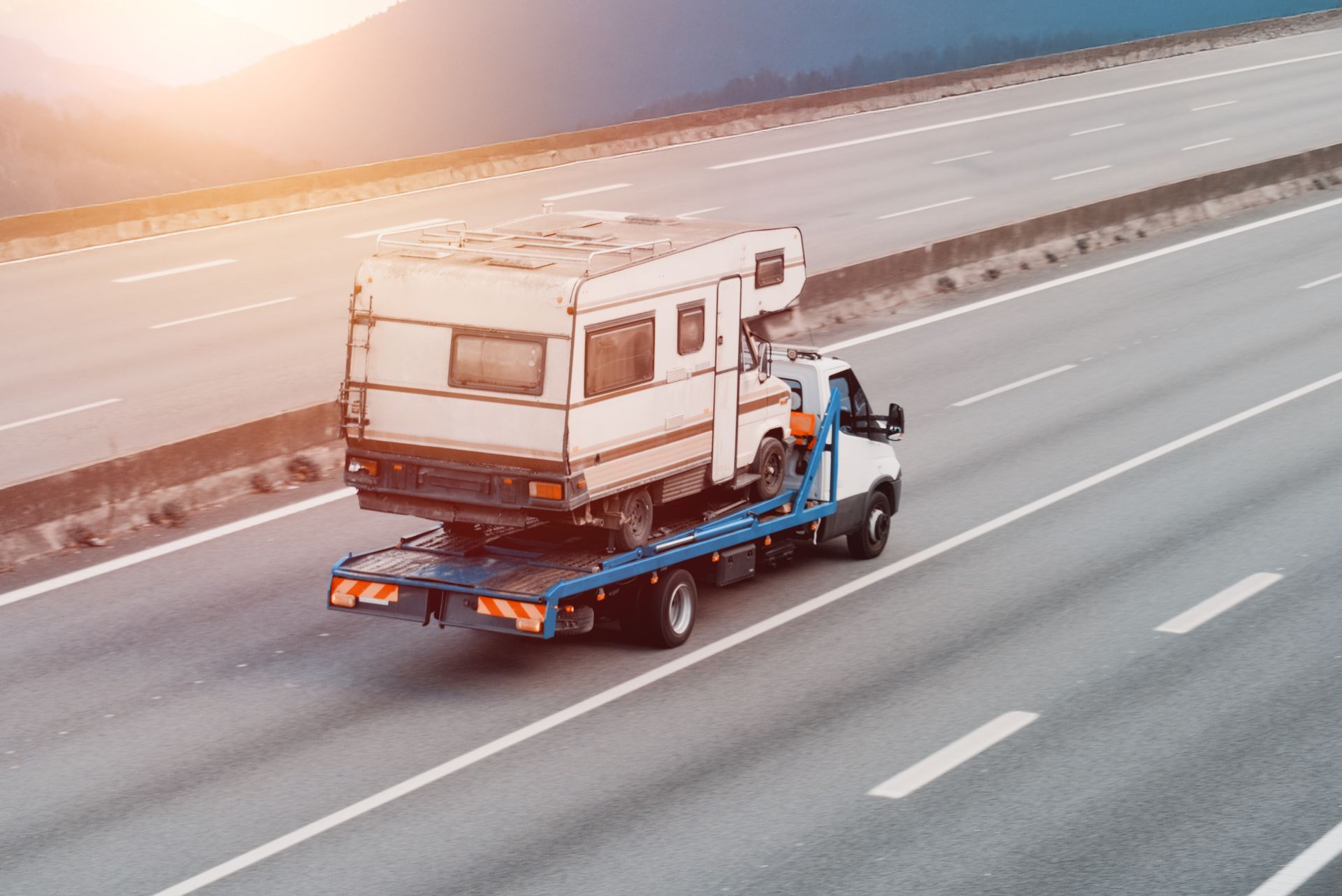
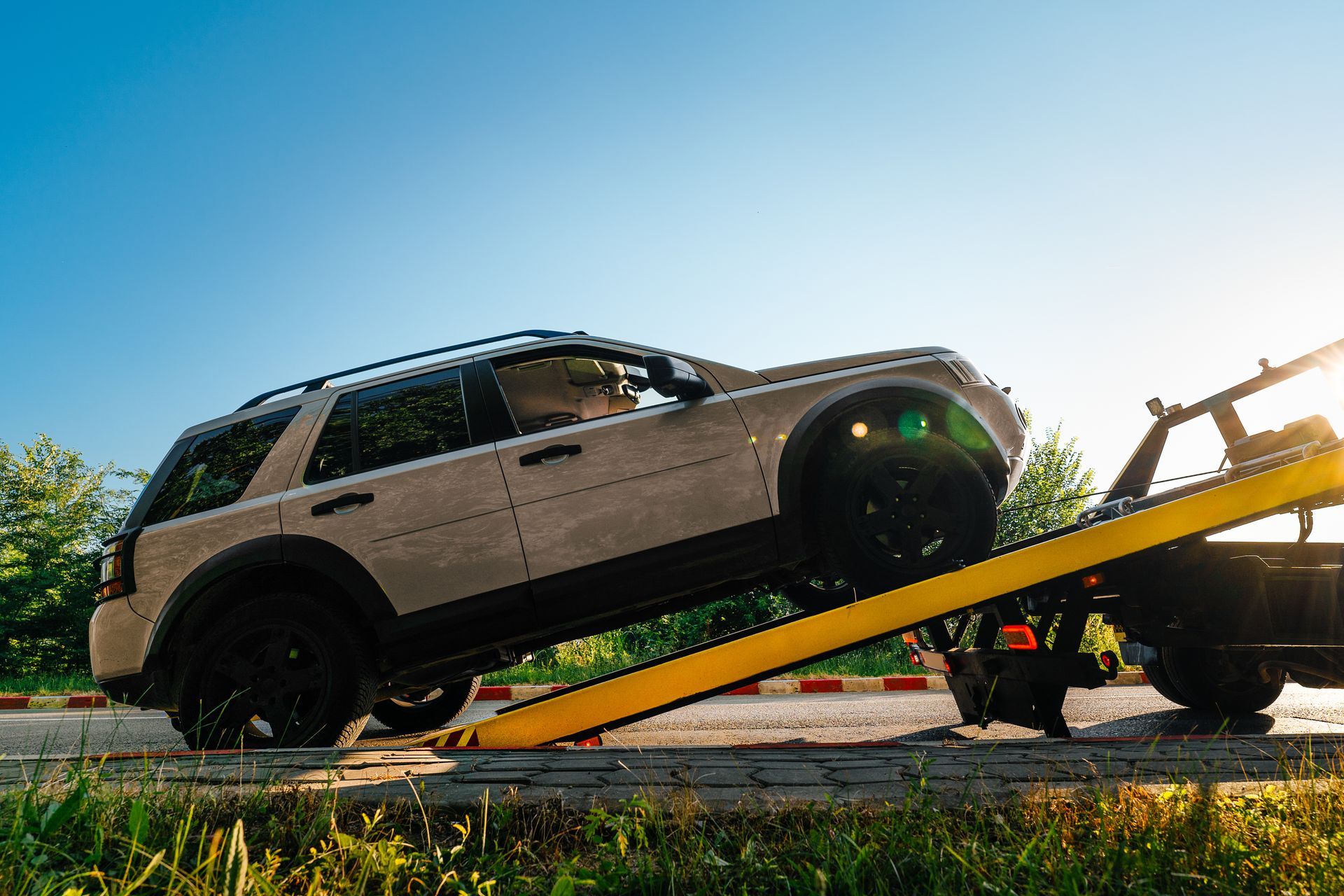
A flatbed, also called a rollback, works by tilting a hydraulic platform down to road level and winching your vehicle fully onto the deck. All four wheels leave the pavement and stay there for the entire trip. That total separation is everything when it comes to AWD and 4WD protection.
Contrast that with wheel-lift towing, which raises only the front or rear axle while the other pair of wheels rolls on the road. For a standard front-wheel-drive or rear-wheel-drive vehicle, lifting the driven wheels often works fine. For an AWD or 4WD vehicle, there is no free pair of wheels, because the front and rear axles are tied together through a transfer case or center differential. Turn one wheel and you turn the whole driveline, whether the engine is on or not.
AWD and 4WD Drivetrains Are Built to Run, Not Coast
Drivers sometimes ask what is 4WD flatbed towing and why it matters for your AWD or 4WD vehicle specifically, rather than any vehicle. This is the core reason: the drivetrain in an AWD or 4WD vehicle is designed to be driven by the engine, and the engine also powers the pump that circulates lubricating fluid through the transfer case, differentials, and couplings. When your vehicle is being towed with wheels on the road and the engine is off, those internal components are spinning at road speed with no fluid pressure coating them. The result is metal-on-metal friction and heat buildup in parts that are expensive to replace.
Most AWD systems feature a permanently engaged drivetrain that cannot be disengaged simply by shifting into neutral. Putting the transmission in "N" does not disconnect the center differential or transfer case. The damage continues regardless.
Some part-time 4WD trucks, such as older body-on-frame pickups with a true neutral transfer case position, can sometimes be towed differently. But if you are uncertain, the correct answer is always a flatbed. A professional driver familiar with your specific vehicle type will tell you which applies.
The Damage That Wheel-Lift Towing Can Cause to AWD Systems
The harm from incorrectly towing an AWD or 4WD vehicle is often invisible until you drive it again. Any technician explaining what is 4WD flatbed towing and why it matters for your AWD or 4WD vehicle will point to these common damage types:
- Burned or seized viscous couplings from heat buildup during transport.
- Worn clutch packs in the center differential from sustained slip.
- Transfer case bearing failure caused by unlubricated high-speed rotation.
- Shortened transmission life from internal components rotating without pressurized fluid.
Even a short tow around the block can cause enough micro-damage to shorten the life of your drivetrain by years. The repair cost for a transfer case or differential typically runs into the thousands, far exceeding the cost difference between a wheel-lift call and a proper flatbed dispatch.
When to Ask Specifically for a Flatbed in Grants Pass
If you are asking what is 4WD flatbed towing and why it matters for your AWD or 4WD vehicle, the short answer is this: if your vehicle has AWD, 4WD, quattro, xDrive, 4MATIC, or any similar all-wheel or four-wheel drivetrain badge, request a flatbed before the truck rolls. The same applies to electric vehicles, luxury cars, and low-clearance vehicles where a wheel-lift hook can catch aero shields or bumper components.
At Fairgrounds Towing & Fuel LLC, our fleet includes flatbed equipment alongside wheel-lift trucks and heavy-duty recovery rigs. When you call, tell our dispatcher your vehicle's drivetrain type and we send the right truck from the start, no guesswork, no second dispatch.
Our flatbed towing service for Grants Pass, OR covers the entire region, including Cave Junction, Merlin, Rogue River, Murphy, and the rest of Josephine County, 24 hours a day, every day of the year.
Does putting a 4WD in neutral protect it during towing?
No. Shifting the automatic transmission into neutral disengages internal clutch packs, but the center differential and transfer case remain mechanically linked to the wheels. A flatbed is still required.
Can all AWD vehicles be towed the same way?
No. AWD systems vary by manufacturer. Some part-time 4WD trucks with a true neutral transfer case may qualify for other methods, but flatbed towing is always the safest option regardless of system type.
Call Fairgrounds Towing for the Right Truck, Right Now
When your AWD or 4WD vehicle is down in Grants Pass, OR, getting the wrong tow truck is a costly mistake. If you still have questions about what is 4WD flatbed towing and why it matters for your AWD or 4WD vehicle, our team is ready to answer them before we even hook up. The team at Fairgrounds Towing & Fuel LLC has handled 4WD flatbed towing across Southern Oregon for decades, and we send the correct equipment from the first call.
Call us any time at 541-479-5501 or find us at 780 Union Ave, Grants Pass, OR 97527. We are available 24/7 and dispatch fast, because your drivetrain is worth protecting.
Need a Flatbed for Your AWD or 4WD? Call Fairgrounds Now.
Don't risk your drivetrain with the wrong tow truck. Fairgrounds Towing & Fuel LLC dispatches flatbed equipment 24/7 across Grants Pass, OR and all of Josephine County. Call
541-479-5501 or visit us at 780 Union Ave, Grants Pass, OR 97527. Transparent pricing, no hidden fees, and local expertise since 1960.